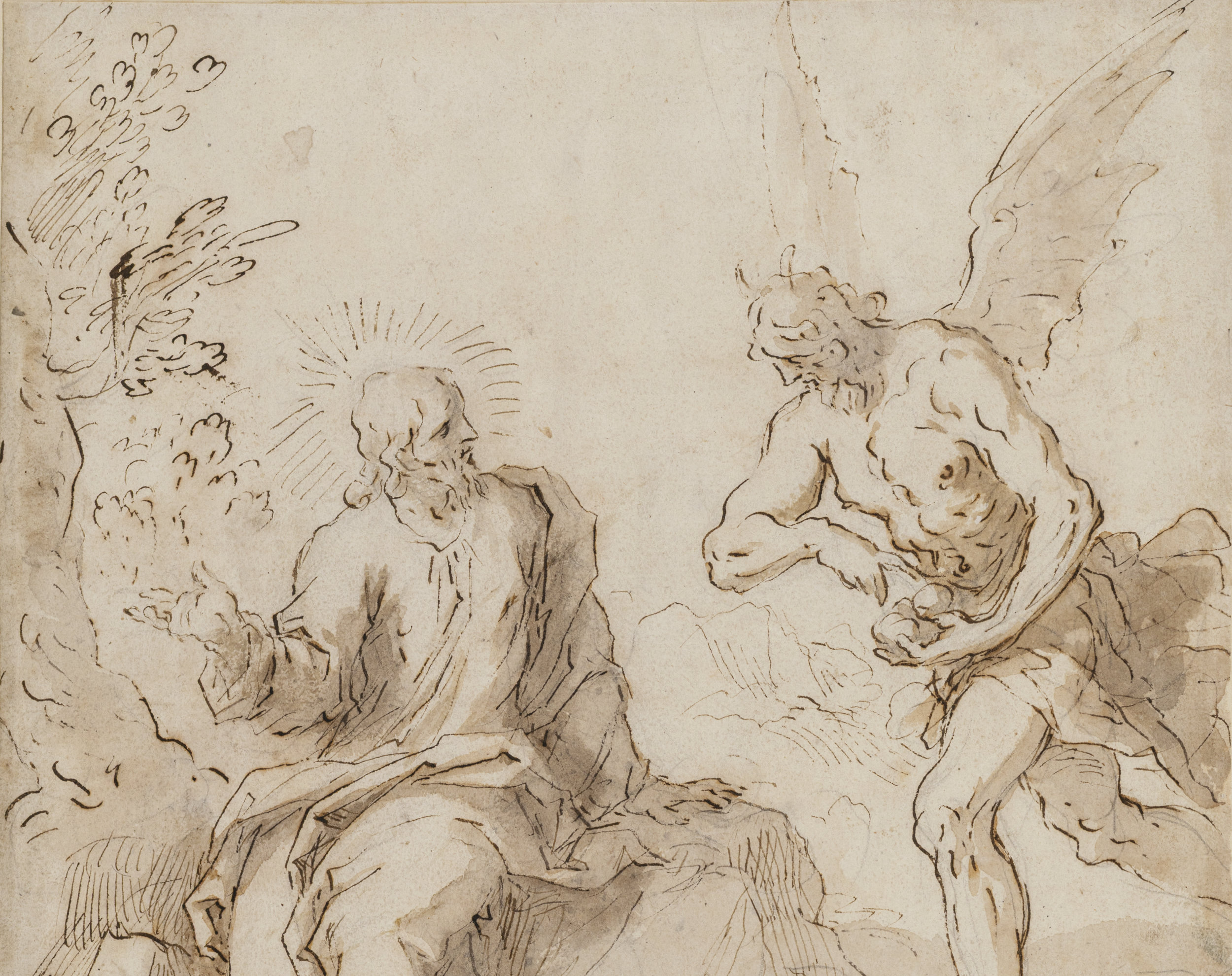
Palma il Giovane, disegno raffigurante Cristo tentato dal diavolo

Nel segno di Venezia

The Alessandro Favaretto Rubelli Donation

Curated by Alberto Craievich

On display at Ca’ Rezzonico are drawings by 16th-century masters and masterpieces of 18th-century Venetian art from the Favaretto Rubelli Donation. A gift to the city, in the name of Venice.

With this exhibition at Ca’ Rezzonico – Museum of 18th-Century Venice, the Fondazione Musei Civici di Venezia presents the recent donation by Alessandro Favaretto Rubelli, president of the historic Venetian textile manufacturer. The collection comprises 29 precious drawings by old Venetian masters, including Palma il Giovane, Luca Carlevarijs, Sebastiano Ricci, Canaletto and Giambattista Tiepolo, which the lawyer and Cavaliere del Lavoro has chosen to donate to the city of Venice, entrusting them to the Prints and Drawings Cabinet of the Fondazione Musei Civici di Venezia.

The result of a refined passion for collecting, the collection reflects Alessandro Favaretto Rubelli’s deep connection with Venice, its history and its artists. Alongside his entrepreneurial career, he has cultivated a strong interest in the history of the Venetian Republic, building over the years an important collection of antiquarian books devoted to Venice, including historical works, guidebooks and illustrated albums dating from the late 15th century to the early 20th century.

The collection, displayed in the portego on the first floor of Ca’ Rezzonico, is divided into two main sections. The first comprises a group of 16th-century drawings, among which Christ Tempted by the Devil by Palma il Giovane, one of the leading artists of the 16th and 17th centuries, stands out. A preparatory drawing for a lost large-scale canvas once in the Doge’s Palace, the sheet reveals the painter’s extraordinary graphic skill. The collection also includes his The Prayer of Saint Charles Borromeo (1624).

The second section, devoted to 18th-century Venetian art, forms the heart of the donation and brings together works by some of the leading artists of the final era of the Serenissima Republic. Particularly noteworthy are the five Studies of Macchiette by Luca Carlevarijs, from the collection of Tito Miotti, which enrich one of the most important groups of the artist’s drawings held in Venice’s civic collections.

The donation also includes a black-chalk preparatory drawing by Sebastiano Ricci for The Temptations of Saint Anthony Abbot, a masterful example of the artist’s ability to construct light and volume. It is displayed alongside works by his pupils Gaspare Diziani and Francesco Fontebasso.

No collection devoted to Venetian drawing would be complete without a caricature by Giambattista Tiepolo, from the Valmarana album. A brilliant example of the artist’s satirical talent, it brings its characters to life with just a few swift strokes of ink.
The exhibition concludes with two studies of views by Giovanni Antonio Canal, known as Canaletto. Formerly part of an album in the Italico Brass collection, they document the Venetian master’s working method and make a significant addition to the civic collections.

Alessandro Favaretto Rubelli’s donation is a gesture of extraordinary cultural and civic value. It confirms the central role of the Prints and Drawings Cabinet in the study, preservation and promotion of works on paper, and reaffirms the mission of the Fondazione Musei Civici di Venezia to safeguard and pass on the cultural heritage to future generations.

Alessandro Favaretto Rubelli joined his family business in 1955, at just twenty-four years of age, and soon led its international expansion, fostering collaborations with internationally renowned artists and designers. In 2018, he also founded the Rubelli Foundation, with the aim of promoting and preserving the company’s historical and contemporary heritage, which includes, alongside its Historical Archive, thousands of designs and over fifty thousand textile samples.

Image: Palma il Giovane, Christ Tempted by the Devil, pen, brown ink and brown wash on white paper, 285 × 261 mm